


Let’s be honest, there are many reasons why our country is not functioning in a way that is providing a better society for all of us. Whether you’re looking at housing, healthcare, education, agriculture, climate policy, banking policy, there are problems everywhere.
For all those reasons I just laid out, it makes perfect sense why there’s so many people who just don’t want to engage with politics whatsoever. It feels like there are more problems than there are answers. It’s hard to know where you even start with this mess of a corrupt system we have here in the United States
How do we address these problems? What do we do next? I don’t think that there’s one particular answer that can be provided for those questions.
Here’s one thing I do know, the current power structure that is place, directly benefits the Republican and Democratic Parties. Parties that have made it damn near impossible for any outside force to oppose them, while simultaneously making it damn near impossible for any true transformational force to enter them.
So again…how do address this problem? To which, again, I do not believe there is any one answer.
What I do believe, is that we need to address this problem with a variety of solutions, attacking from as many angles as possible. One of those angles is the entrenched power of the 2 party system.
Let’s take the Democrats as an example - the one thing that I’ve constantly talked about in regards to the Democratic Party, is that they have no incentive to be anything other than what they are right now. All they have to do, is constantly tell their constituents that they are better than the Republican party, and that’s enough. Given the radical nature of the Republican party, and the very real threat that they present, the fear of having them in power is enough just to vote Democrat no matter what.
Now, I don’t hold that thought process against anyone, I myself believe that it’s a decent strategy in the short term, but it needs to be just a short term strategy.
In the long term, this strategy only creates a terrible negative incentive for the Democratic Party. In this scenario, the Democratic Party never needs to deliver on any promise, because they can always just point to the fact that they are not the Republicans. Which in turn, creates a society that never really progresses the way we need it to. Due in large part, because the opposition party never feels any true incentive to deliver on promises, other than existing to be the opposition.
And for me, this goes back to the toxicity of the two-party system. The Democrats feel emboldened to be this way, because they do not believe that their existence in Washington will ever truly be challenged, while the Republicans remain as radical as they are.
And what incentive does that leave for the Democrats to be the progressive force that we need them to be? Meanwhile, it’s hard for any true progressive to enter the Democratic Party, given the nature of the primary system and all of the corporate money that flows into the Democratic Party machine.
So now let’s talk about how we can attack this two-party system, how can we directly address this entrenched power? I believe one way is through changing how we vote in elections.
Our current model, this “choose one” style of voting, is only helping to maintain the status quo. It’s due to this system, that we hear every cycle the dangers of the “3rd party vote”. That they only exist to play the spoiler role. However, if we had a different voting method, like ranked choice voting, the spoiler method would no longer exist.
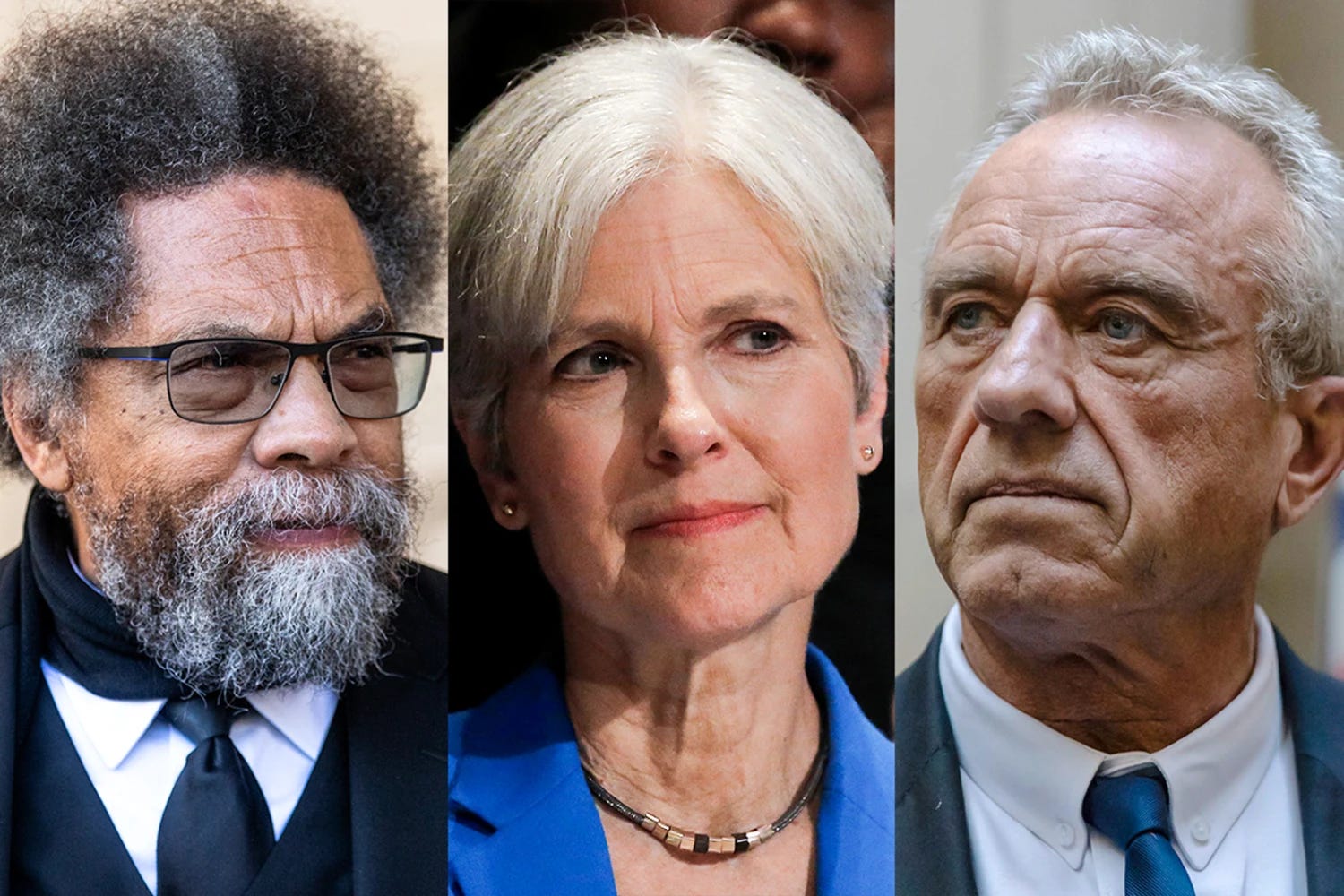
You could vote for Working Families Party 1st, or Green Party 1st, or any independent candidate, and then vote Democratic Party 2nd. Doing this would accomplish eliminating the “spoiler effect” and still addressing the threat from the other major party.
However, the other added bonus from this, is that it will likely show an increase in smaller parties gaining access to our federal government nationwide. When that happens, the Democrats will see their majorities shrink everywhere.
At which point they’ll be left with two options - 1. change their current apparatus to be more friendly to the wants of the voters. 2. Their overall influence on our governments will dissipate. Once they see their donations shrink around the country, and various corrupt officials can no longer bank on getting their seats in Congress, true change has the possibility to enter the chat.
Now, while I firmly believe that we need to implement rank choice voting or other voting method reforms across the country, that’s not to say that there won’t be problems along the way. So let’s talk about this story coming out of Portland, Oregon ⬇️
Portland’s ranked-choice debut causes voter engagement to ‘crater’; 1 in 5 who cast ballots chose no one for City Council
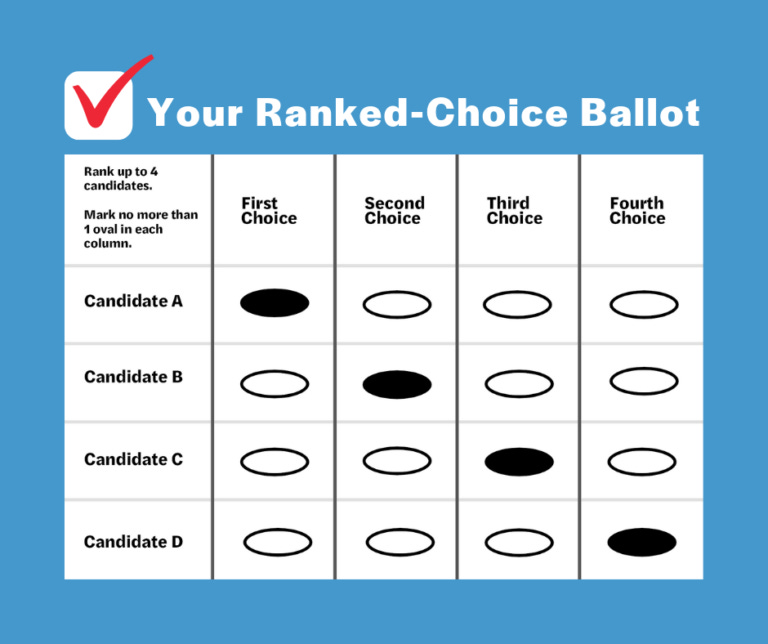
According to the Oregonian, Portland, debut of ranked-choice voting resulted in significant voter disengagement, with one in five voters leaving City Council races, blank despite the option to rank up to six candidates.
Many ballots featured as many as 30 candidates per race, which analyst believe contributed to voter confusion. “People are not used to seeing a ballots this long, and for some, it was overwhelming,” said one local election expert.
Ranked-choice voting, approved by Portland voters, was introduced to increase civic participation, and create fairer outcomes by allowing voters to rank their preferences. However, early results suggest the complexity of the new system may have had unintended effects. “The promise of ranked-choice voting was to engage more voters, but instead, we saw a large portion of the electorate opt out of participating in some key races,” said another analyst.
Supporters of the system remain optimistic about its potential as voters adapt. “This was the first time Portland has used ranked-choice voting, and change takes time,” said an advocate for the system. They argue the method provides a better representation of voter preferences, and expect participation to improve in future elections as familiarity grows.
This section is from The Oregonian
When I came across the story, I was a little disappointed, but not entirely shocked. While I do believe this method will be beneficial going forward, there will be some growing pains.
For starters, while having more choices is great, I do believe there needs to be a somewhat understandable cap on how many folks can be on a ballot. Also, There has to be outreach into the community to explain how ranked-choice voting works, and why the changes are being made.
I would also like to see either state governments or the federal government, take part in sending out booklets to voters, explaining who is on their ballot. Too often a name is on the ballot and most of us have no idea who they are, or what they stand for.
In summary, changing our voting system here in America will be a process that takes time, but it’ll be a process that I believe is worthy of the pursuit. It’ll come with some challenges, but I think what’s on the other side, will be a better version of a system than we have currently.
It’ll provide better outcomes, and it will give more choices to people who are tired of being stuck with voting of the lesser of two evils constantly. It won’t solve all our problems we have, but sometimes you have to just solve things one step at a time.
If you enjoyed reading this post, please consider upgrading to our paid version of Substack, to support Independent Thought.