


I was in high school on the East Coast when Columbine took place. I remember we were all so shocked, so surprised, full of “how did this happen?” The ensuing weeks were filled with questions about the responsibility of their parents, of their music (was Marilyn Manson to blame?), and their mental health. We had shooter drills, which at the time, consisted of a SWAT team complete with shields and all-black gear, hiding around corners as we walked through the hallway. I don’t remember where we were going or why we were in the hallway to be honest.
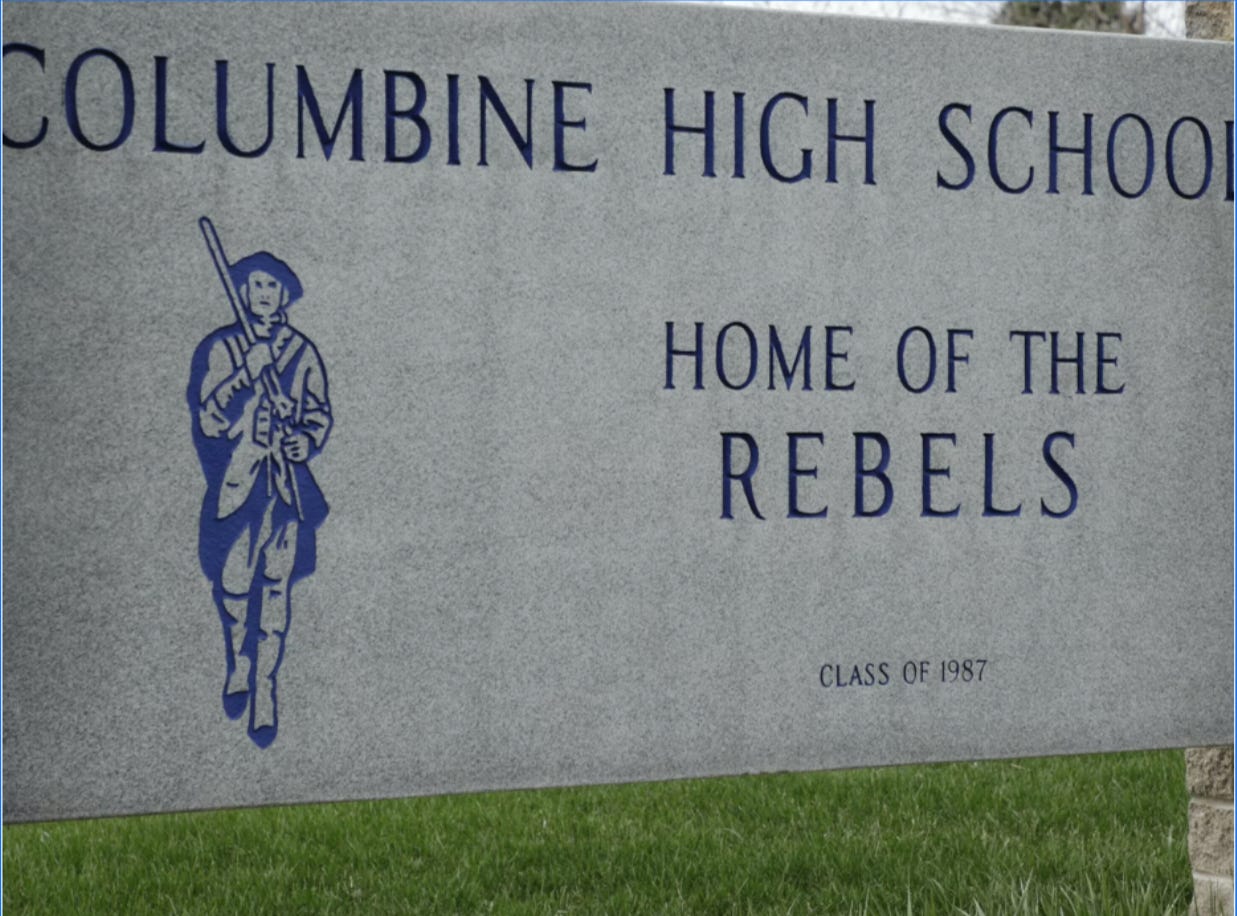
Image source: NPR
Life eventually took me to Colorado, where I was a preschool special education teacher when Sandy Hook happened, right before Christmas break. Now, I wasn’t the one being protected, I was the one tasked with being the protector. Three- and four-year olds don’t understand shooter drills, so you almost have to turn it into a game of who can be the most quiet. It’s the worst game I’ve ever played.
There are plenty of other examples of how not just school shootings have impacted my life: a friend was attending Virginia Tech when that happened, I had just moved to Colorado when the Aurora theater shooting went down, I texted a friend to make sure they weren’t grocery shopping when someone opened fire in a King Sooper’s in Boulder, and a couple of weeks ago someone shot a bullet through my neighbor’s front window. I live across the street from an elementary school and whenever they happen to have a lockdown drill while I’m walking to dogs, I have a moment of panic of “is it really a drill this time?”
The worst part is that my experience isn’t uncommon. On the contrary, just about everyone in the Denver/Boulder area knows someone who has been either killed or narrowly escaped a shooting, school or otherwise. So when news breaks of the recent school shooting in Madison, Wisconsin, it’s a defeating feeling. Defeating because I’m not surprised it happened again. Defeating because I know nothing is going to change. Defeating because the truth is, no one who has any control over anything really cares or something would have been done already.
But why is that? Surely, no one wants children to die. We can agree on that, right? Surely, we all believe that children should be safe in school. Or in the grocery store. Or at the movies.
We pretend that this is about guns, mental health, poor parenting, or needing more security in schools. But what Luigi Mangione brought to light is that it’s actually because they don’t think it could happen to them. It’s called invulnerability bias — when a person feels immune to risk. They also happen to believe they are less likely to experience a negative event.
So when something bad does happen to them, it’s not just a regular ol’ shooting, it’s deemed an act of terrorism.
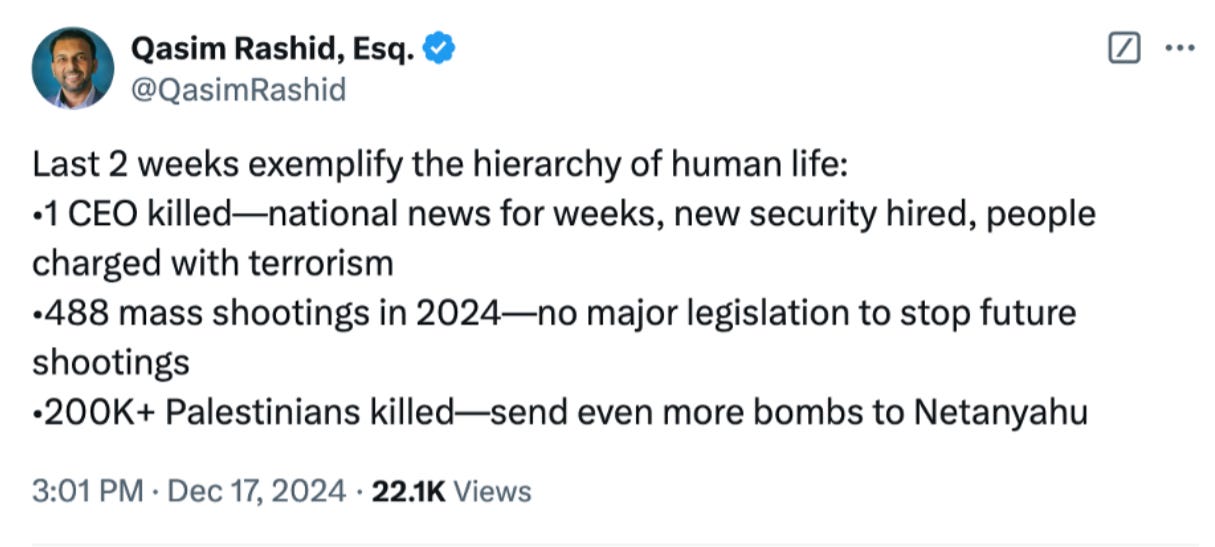
It’s not all that surprising when you think about it: labeling a person or group of people as a terrorist is a strategy that the politicians and media have long used to portray said person as dangerous, evil, or morally reprehensible — the complete opposite of the current public perception of Luigi Mangione. He’s been hailed as a hero, someone who stood up against the corrupt health company — who one could argue is the actual terrorist in this situation — so the political playbook says this is the exact situation in which someone should be labeled a terrorist.
(Or you could take the stance of one my friends who said he’s either not white enough to “have his whole future ahead of him,” or the CEO wasn’t female enough for anyone to say “this wouldn’t have happened if he wore his bulletproof vest.”)
The response from politicians and Brian Thompson’s CEO peers was similar to how we all felt the first time a shooting was a little too close to home: shock, horror, fear, dismay. Most of all, they wondered if they were next. New York Governor Kathy Hochul even proposed a hotline for executives to report security threats.
Meanwhile, the public has come together in a way we haven’t seen since 9/11. Just about everyone in the United States has a story of, at the very least, being ripped off by a health insurance company and at the very most, had a family member who died as a result of an insurance denial. There are obvious differences between why people have banded together now vs. 9/11 but the key difference is that we can’t blame this situation on “those people over there” or the “terrorists with the brown skin” (though anyone labeled a “terrorist” usually has brown skin regardless of where they are from).
This is the country that we have built.
Yesterday, I saw a post by Jo Lorenz that really hit the nail on the head. In it, Jo asks “I mean, what exactly did America expect when it raised an entire generation on ‘duck and cover’? When it taught kids that death could come for them at any moment, in any classroom, and the best advice adults could offer was ‘try to make yourself smaller’?”
Maybe the real reason people are so in awe of Luigi Mangione is because he did what very few of us have — he took action. I am by no means condoning murder and am not suggesting that is what anyone else should do, I’m just saying that we should not be surprised that this happened.
People are fed up and tired of being ignored. People are tired of being told that things like universal healthcare just aren’t possible when 70+ countries (including Canada, France, Germany, Italy, Japan, New Zealand, Spain, and the United Kingdom) have managed to figure it out. No one wants to see another politician wring their hands and say “gee I wish we could do something about that, but we can only defeat [insert the other side here] with your donation of $20.”
THEY ARE ALL THE OTHER SIDE.
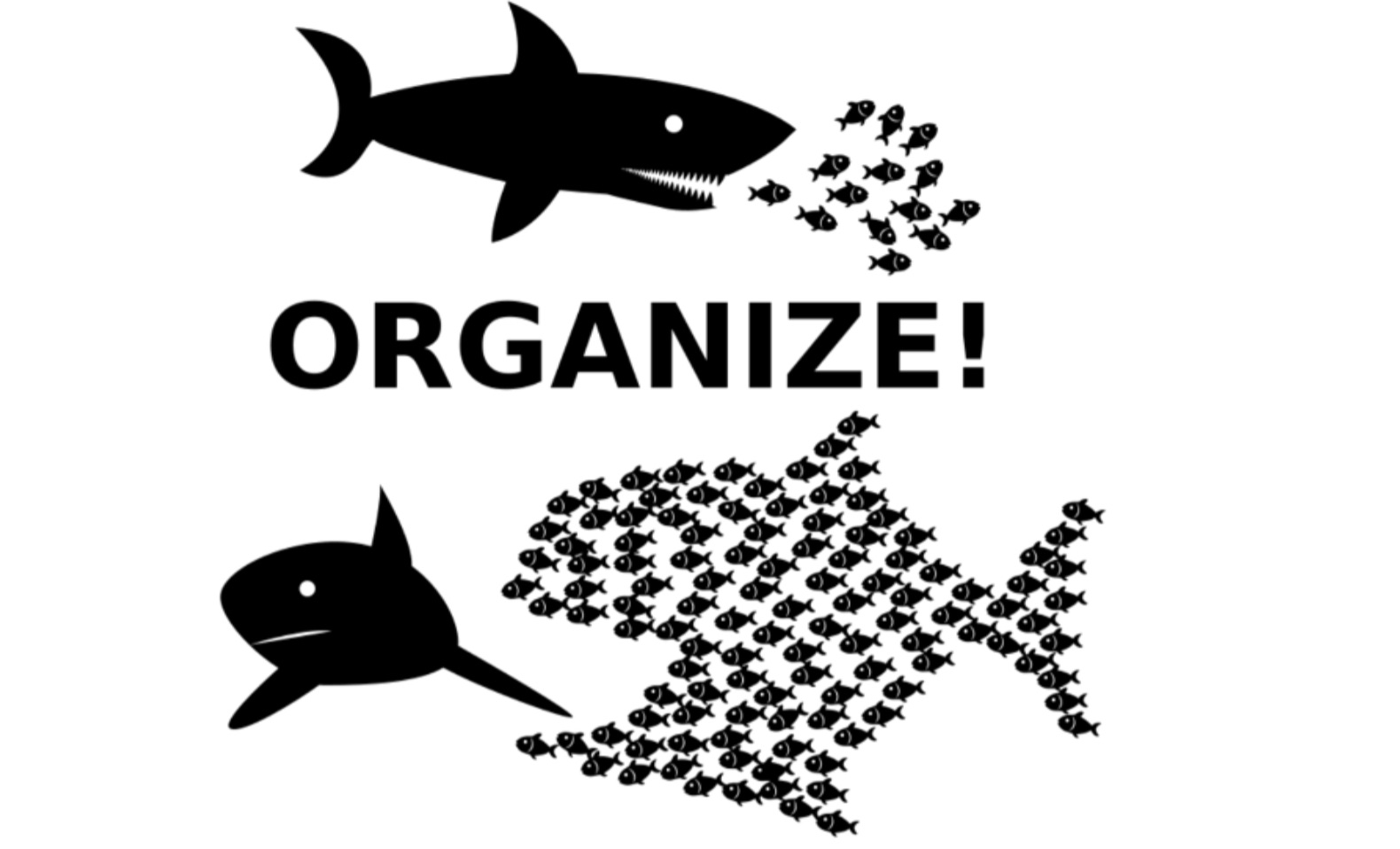
From Palestine to healthcare to the environment to women’s rights and everything in between, there is no shortage of things to be stressed out or worried about. But one thing is clear: no one is coming to save us. Politicians have had their chance, and they’ve failed. It’s now up to us. Change doesn’t come from thoughts and prayers or empty promises — it will come when we demand accountability, when we organize, and when we refuse to accept this as normal.
We have the numbers, we have the power, and we have the responsibility to act. And the time to act is now. The question isn’t whether change is possible — it’s whether we’re willing to fight for it.
So what can you do about it? Get involved with a cause or local chapter of a larger organization that matters to you. Here are a few that I have recently discovered (copied and pasted from an email from one of them that summarizes each group):
Indivisible: Indivisible is a grassroots movement of thousands of local Indivisible groups with a mission to elect progressive leaders, rebuild our democracy, and defeat the Trump agenda. They just launched their Indivisible Guide 2.0 and are actively accepting new groups. Click here to search the hundreds of local Indivisible groups to find one near you that’s accepting new members to join. And if you want to make your Community Gathering group into a new Indivisible group, you can apply to become a new group here.
MoveOn: MoveOn is a multi-issue organization using grassroots member power to organize on issues and elections to achieve an America where we can all thrive.
MoveOn’s Mobilizer community, a place for individuals around the country to build community and take action on a range of issues. You can join the MoveOn Mobilizer community here.Public Citizen: Corporations have their lobbyists in Washington, D.C. The people need advocates too. That’s where Public Citizen comes in. They organize to put people ahead of corporate power, and to make sure that no politicians succeed in putting themselves above the law. To join their community of democracy activists, including working to defeat Kash Patel’s nomination and defeating attacks on our democracy under the Trump administration, please fill out this form and they'll follow up with you.
Working Families Party: The Working Families Party is made up of regular people from all backgrounds, united to create a better future for everyone. Our model is to build governing power through elections from the ground up, starting at the local level. Learn more about how you can get involved with WFP in your state or region by joining an upcoming WFP membership meeting and checking out their work at workingfamilies.org.
Thanks for your insight Abbie! I feel like I’ve been trying to find the succinct words forever, but you hit the nail on the head with invulnerability bias. This whole time they haven’t cared because it couldn’t really touch them and as soon as it did, it must be terrorism. Nothing shy could touch their precious positions. I look forward to reading more from you!
Australia no longer has universal health care. It's slowly being replaced by a system where you need to make an up front payment to a Dr before you then get the government rebate. Sometimes these upfront payments are hundreds of dollars, meaning people doing it tough are excluded fro the services they need.
The government rebate is only a portion of the cost, so if my cost to see a sleep specialist is $400, I only get (approx) 300 of that. That 100 is approx 1/4 of my weekly pension .
That's not universal health care.